



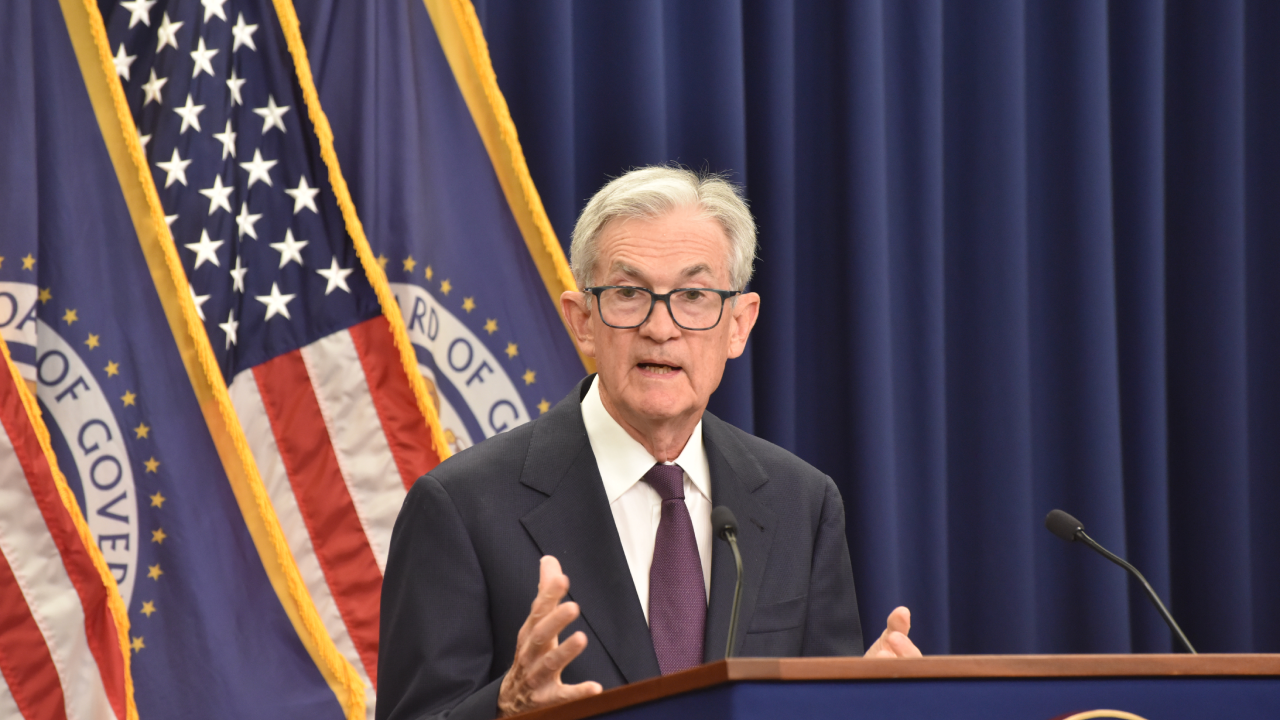
Higher interest rates played out on stocks, cryptocurrency and commodities over the past few years. But now that the Federal Reserve has been cutting short-term rates, what can investors expect going forward — and how long will the shifting rate environment affect markets?
On Dec. 10, the central bank reduced its benchmark interest rate by 25 basis points to a range of 3.5% to 3.75%, following similar decreases in October and September.
After three interest rate cuts in the last half of 2024, the Fed held rates steady for most of 2025, carefully watching the disruptions caused by President Donald Trump’s tariffs, as well as inflation and rising unemployment. In September, the Fed started cutting rates again to help buoy the U.S. economy.
All told, the Fed has now lowered interest rates six times since September 2024.
How interest rates impact investments
Interest rates are one of the biggest tools the Fed has for influencing the economy. By lowering rates, the Fed can stimulate economic activity, making it cheaper to borrow. On the other hand, by raising interest rates, the Fed can slow economic activity, making credit more expensive — which is a useful strategy to fight inflation.
The Fed raised rates 11 times during the last tightening cycle starting in 2022, and it’s easy to spot when markets really took notice that the central bank wasn’t kidding about recalibrating monetary policy. It was November 2021 when cryptocurrency and many of the riskiest stocks peaked.
“When the Fed introduced restrictive monetary policies by increasing rates in 2022, this caused equity markets and cryptocurrencies to appropriately decline in valuation,” says Octavio Sandoval, principal at Illumen Capital.
“The stock market will never not worry about future interest rates,” says Steve Azoury, head of Azoury Financial in Troy, Michigan. “The cost of borrowing impacts all areas of investing, purchasing and savings. Just the anticipation of what may happen is enough to cause a stock market reaction.”
While interest rates were moving higher, many stocks were moving lower, anticipating slower economic conditions. But when investors got a clearer picture of the end of rising rates in 2023, the stock outlook became more optimistic.
Major stock indexes such as the S&P 500 spent most of 2022 in a funk due to rising rates, but they fared well in 2023. The S&P 500 rose about 24% in 2023, while the Nasdaq Composite climbed around 43%. They followed that up strongly in 2024, and have risen to new all-time highs in 2025 after rebounding from a meltdown over Trump’s tariffs in April.
In 2022, cryptocurrency prices struggled as interest rates looked to move higher. When rates began to top, crypto prices bottomed and then rose in 2023 and throughout 2024. The introduction of Bitcoin ETFs has helped boost the price of Bitcoin, and the prospect of lower rates and inflows to ETFs have pushed Ethereum higher, too.
How do lower interest rates affect stocks?
A lower fed funds rate makes it easier for money to flow through the economy, helping to boost markets or at least support them from declining more. As lower short-term rates help boost the economy, stocks begin rising due to the prospects for higher corporate profits. Lower short-term interest rates make stocks and other risky investments look like more attractive investments compared to alternatives such as bonds.
In contrast, when short-term rates are high or expected to move higher, stocks endure notable volatility as investors factor in rising rates. In other words, stocks begin pricing in a slowing economy and lower profit growth due to higher rates.
While the Fed lowered short-term interest rates in late 2024, longer-term interest rates ticked up notably. Then, after declining for most of 2025, the bellwether 10-year Treasury ticked higher in December and is now offering a 4.16% yield.
How interest rates have affected crypto and commodities markets
Some other major asset classes have had varied responses in the face of fluctuating rates.
While cryptocurrency prices plummeted along with other risky assets, many commodities spiked higher in early 2022, including oil, but many of those moves proved short-lived. With the rising federal funds rate slowing and then pausing in 2023, both oil and crypto found some support, while gold powered higher.
Gold has long been a safe haven in times of volatility, and has been on a tear in 2024 and 2025. Meanwhile, cryptocurrency has often been touted as a cure-all for what ails you, whether that’s inflation, low interest rates, lack of purchasing power or devaluation of the dollar. Those positives were easy to believe in as long as crypto was rising, seemingly regardless of other assets. But crypto is highly volatile.
“The truth is that crypto prices have proven to be impacted by the same directional sentiment that impacts retail stock investors,” says Dan Raju, CEO of Tradier, a brokerage platform. “In general, high interest rates scare investors away from riskier investments like crypto, and the lowering of rates will be seen as a positive by the crypto investor community.”
Indeed, cryptocurrencies responded to reduced liquidity, as did other risky assets, by falling when the Fed announced in November 2021 its intention to raise rates and then throughout 2022 as the Fed aggressively followed through. On top of that, the blowups of cryptocurrencies and exchanges such as FTX hammered traders’ confidence in these virtual assets.
But instability in the banking sector in 2023 led many traders to bid up cryptocurrency, in the belief that the future path of rate increases would be less severe. And as 10-year Treasury rates peaked in October 2023 and then fell, riskier assets rose, as the path to a lower federal funds rate appeared clear and then actually did appear in September 2024.
However, other factors are also at play in the rise of cryptocurrency. One of the most notable is the approval of spot Bitcoin ETFs, which has driven a lot of money to this cryptocurrency. The election of Trump, perceived as the crypto-friendly presidential candidate, also had traders betting strongly on an expected rise in cryptocurrency.
As for commodities, many have been well off their recent highs, as fewer supply constraints and higher interest rates work to take them down a few notches. But the expectation of lower rates helped keep oil from falling substantially below $70 a barrel in 2023 and 2024. Oil bounced around between $70 and $85 for much of 2024, though in 2025 it fell under $60 on fears of a slowing economy and other factors.
How should interest rates impact your investing strategy?
Interest rates, inflation and uncertainty — all can create a stew of volatility for investors. With so much volatility, investors may want to tread cautiously.
However, the best way for most investors to approach the market is to stick to their long-term game plan. For many, the long-term plan means continuing to invest regularly in a diversified portfolio of stocks or bonds and mostly disregarding the noise around the world. For others, the game plan may involve buying and holding well-diversified index funds. Either way, don’t let emotions get in the way of an effective long-term investing plan.
While short-term traders may be sweating rate movements, it’s vital to keep things in perspective. Instead of trying to find the right time to sell, buy-and-hold investors can use the market’s volatility to their advantage and then try to find the right time to add more.
Downturns can be an appealing time to add to your portfolio at discounted prices. As investing legend Warren Buffett once said, “You pay a very high price in the stock market for a cheery consensus.” That is, stocks are cheaper when few agree that they’re an attractive investment.
Bottom line
Interest rates rose quickly in 2022 and 2023. Starting in September 2024, the Fed lowered rates three times in 2024. Then there was a significant pause for most of 2025. But now, the Fed has lowered rates in September, October and December.
Those investors with a long-term investing horizon may view any downturn as an ideal time to pick up some quality investments at bargain prices.
And if stock valuations plummet? Buffett has some wisdom for that situation, too: “Opportunities come infrequently. When it rains gold, put out the bucket, not the thimble.”
Editorial Disclaimer: All investors are advised to conduct their own independent research into investment strategies before making an investment decision. In addition, investors are advised that past investment product performance is no guarantee of future price appreciation.
Why we ask for feedback
Your feedback helps us improve our content and services. It takes less than a minute to
complete.
Your responses are anonymous and will only be used for improving our website.
Help us improve our content
Read the full article here